Next Reign: Kingdom Production Chains
From a wheat field to bars, tools, beer, and potions without stalling the left list.
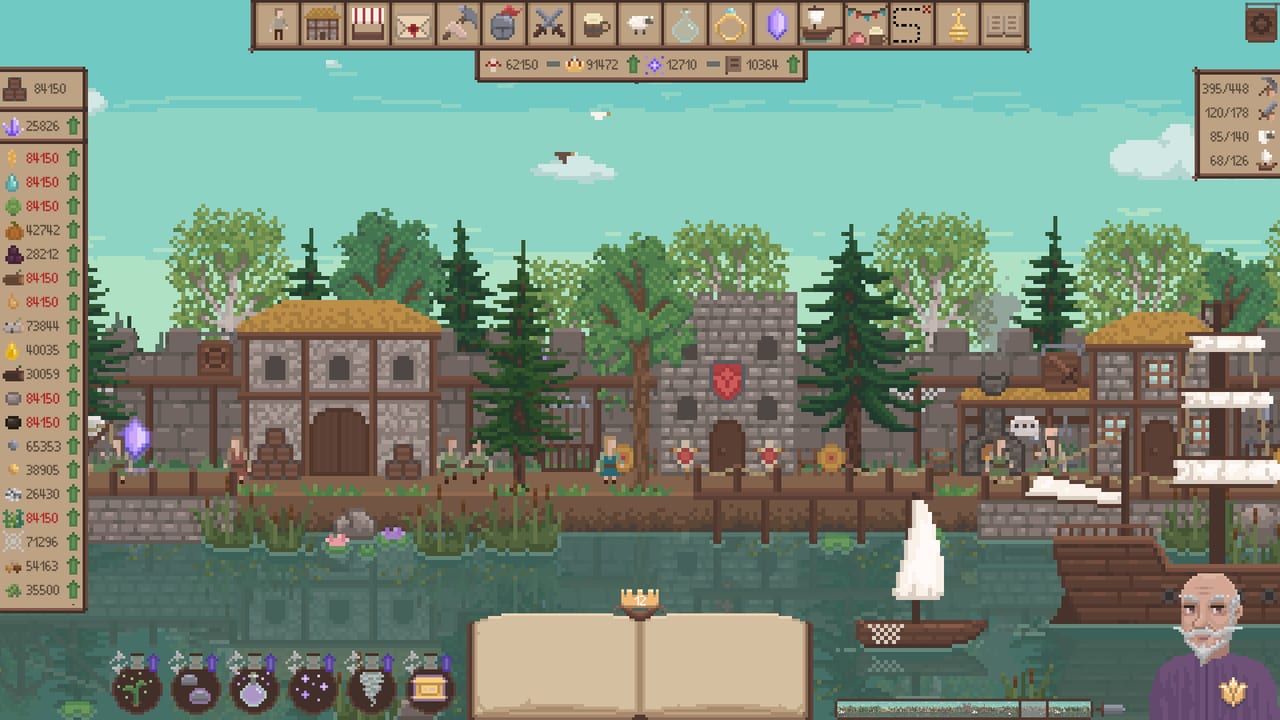
Next Reign: Kingdom is a production game that happens to have a crown and an army. Tiny Tulip Games copied the Settlers instinct: coal and iron ore become bars, bars become tools, tools upgrade the people who gather the next resource. The left HUD is a recipe book in motion. Green arrows are healthy chains. Red arrows are a missing building or a starving worker type. This page is the order those chains should appear. Place the structures with the settlement buildings in build order guide. Test ratios in the production chain planner. Rank the buildings themselves on the building rankings.
If you cannot hire a farmer yet, stop. The first-hour settlement checklist owns wheat, houses, and the first warehouse. Chains start after that village can breathe.
Wheat to population
Wheat is food and the hiring currency for early workers. Farmers gather it. You can still hold left-click on the field, but that click should die as soon as a handful of farmers exist. Houses convert wheat into more bodies by giving those bodies a cap to fill. No house, no hire, no chain.
Keep wheat green while you hire lumberjacks and miners. A red wheat arrow during a hiring spree is expected. A red wheat arrow while nobody is being hired means farmers were outscaled by some other sink: market trades, livestock, or a combat recruit tab you opened too early. Expand the left panel and filter to depleting resources. If wheat is the one flashing, hire farmers or pause the sink.
Experienced farmers, once unlocked, collect more and start hops. Hops are not a first-hour crop. They exist so a later beer chain has a raw input. Do not chase hops while wood is the bottleneck for houses. Prestige farmer-collection nodes make this whole layer faster; they are one of the best early spends on How to hand the crown.
Wood to buildings, stone to unlocks
Lumberjacks feed every construction button: houses, warehouses, the market, the smelter, the smithy, walls, and later docks. Treat wood as the real gold of the early reign. Stone from miners is the key for the market and for walls. You need a little stone, not a mountain, until walls and later structures come online.
A healthy early loop is: wheat hires lumberjacks, lumberjacks fund houses and a warehouse, the warehouse uncaps wheat and wood, miners trickle stone, stone plus a wood buffer buys the market. Skip the warehouse and every trade, craft, and stockpile slams into a tiny cap. Skip miners and the market stays grey. Skip lumberjacks and you will stare at a wheat empire that cannot build a door.
Birch-style later wood and other upgraded gathering show up as worker tiers improve. The lesson is the same as hops: new raw nodes are prestige points and new recipes, not a reason to abandon the base wood pile.
Coal, iron ore, bars, tools
This is the named Settlers chain, and it is the mid-game gate.
- Unlock iron ore and coal gathering (experienced or upgraded miners, depending on the current reign’s unlocks).
- Build an iron smelter. Coal plus iron ore become iron bars.
- Build a tool smithy. Bars become tools.
- Spend tools on worker tiers and on the guild-style upgrades that teach subjects to use those tools.
If ore and coal are green but bars are not, the smelter is missing, unstaffed, or capped. If bars are green but tools are not, the smithy is the hole. If tools exist and workers still gather like peasants, you bought the item and skipped the upgrade that applies it. The left list will not say “you forgot the guild.” The upgrade tab will.
Auto crafting, once bought on the prestige tree, is the node that makes this chain feel like an incremental instead of a clicking job. It will not craft livestock feed for you in the same way; the tooltip carve-out is real. Single-resource crafting bonuses (a later prestige node that speeds a chain if only one type is crafting) are a luxury after the smelter and smithy already exist.
Tools are how the village graduates. Farmers, lumberjacks, and miners with tools collect faster and unlock the next raw goods. That is also how you farm cheap prestige: the first 100 tools, the first 100 bars, the first 100 ore are each a point. Do not sit on a stack of bars to admire them. Push them into tools, then into people.
Market trades
The market converts overflow into whatever the current bottleneck is. Early trades are often wheat out, something scarcer in. Auto-start trading quests, a prestige unlock, turns the market into a background engine. Without that node, you start trades by hand from the market tab. Either way, the market is not a decoration. Footage from the demo through launch puts the unlock near 150 wood and 25 stone, which is why the first hour guide tells you to bank wood.
Favor shows up around trading and kingdom systems. It is another resource type, which means it is another 100-milestone. Do not ignore it, and do not dump the entire wheat stock into a trade that leaves farmers starving. Watch the arrows. A trade that paints wheat red for thirty seconds is fine. A trade that paints wheat red forever is a bad loop.
Later chains: hops, beer, livestock, magic
Once tools exist, the HUD starts growing sideways. Hops from experienced farmers become beer. Livestock appear as a living stockpile that eats. Magic crystals and potions show up as the kingdom leans into the mage line and the late buildings. Water, glory, and monster remains are combat outputs more than farm outputs; they still belong in the left list and they still pay prestige.
Bring these chains online one at a time. Hops while the smelter is dry is a distraction. Potions while you have no warehouse space is a cap problem pretending to be a magic problem. Livestock without a food plan is a red wheat arrow with legs. The production chain planner is the place to sketch “how many farmers per smelter” without demolishing a live town.
Walls, docks, ships, and the castle consume the same wood and stone these chains produce. They are sinks, not recipes. Build them when the phase-by-phase campaign walkthrough says the campaign needs them, not because the button lit up. A dock with no cargo chain is a postcard.
Reading stalls
When the run feels stuck, read the left list from top to bottom:
- Wheat red: farmers, houses, or a trade/livestock sink.
- Wood red: lumberjacks versus construction. Pause buildings.
- Stone red: miners versus walls or unlocks.
- Ore and coal green, bars flat: smelter.
- Bars green, tools flat: smithy.
- Everything capped: warehouse, then another warehouse.
- Everything green and nothing unlocks: you are ready to fight or to prestige, not to build a sixth decorative house.
Combat and production share glory and remains, but they do not share a tab. Keep the army on formation combat and the Blade Queen and keep this page on the recipes. The kingdom only works when both tabs are fed.
Production in Next Reign: Kingdom is not an idle overlay. It is the Settlers loop Tiny Tulip shipped in Godot: people, then goods, then better people. Automate the middle. Spend prestige on the automation. Leave the crown alone until the current chain is actually boring.
Frequently Asked Questions
Quick answers for new rulers and returning prestige runners.
What is the first chain I should finish?
Wheat into farmers into wood into a warehouse, then stone into the market. The first-hour settlement checklist is that loop. Iron comes after.
Why do I have ore but no tools?
Smelt ore and coal into bars, then smith bars into tools. Settlement buildings in build order places the smelter before the smithy. The production chain planner helps size the pair.
When do hops and beer matter?
After experienced farmers exist and the iron chain is not starving. They are mid-late recipes, not a first-hour crop. How to hand the crown is where farmer-collection nodes make hops appear sooner.
Should I stall production to fight?
Keep wheat and wood green, then start combat. Glory and remains are extra resource types. Timing lives on formation combat and the Blade Queen.
Which buildings are worth ranking first?
Warehouse, market, smelter, smithy. See the building rankings for the full order and the honest launch-week review if you are still deciding whether the chain puzzle is the game you want.