Next Reign: Kingdom Honest Review
A first game from Tiny Tulip that knows what a Settlers incremental should be.
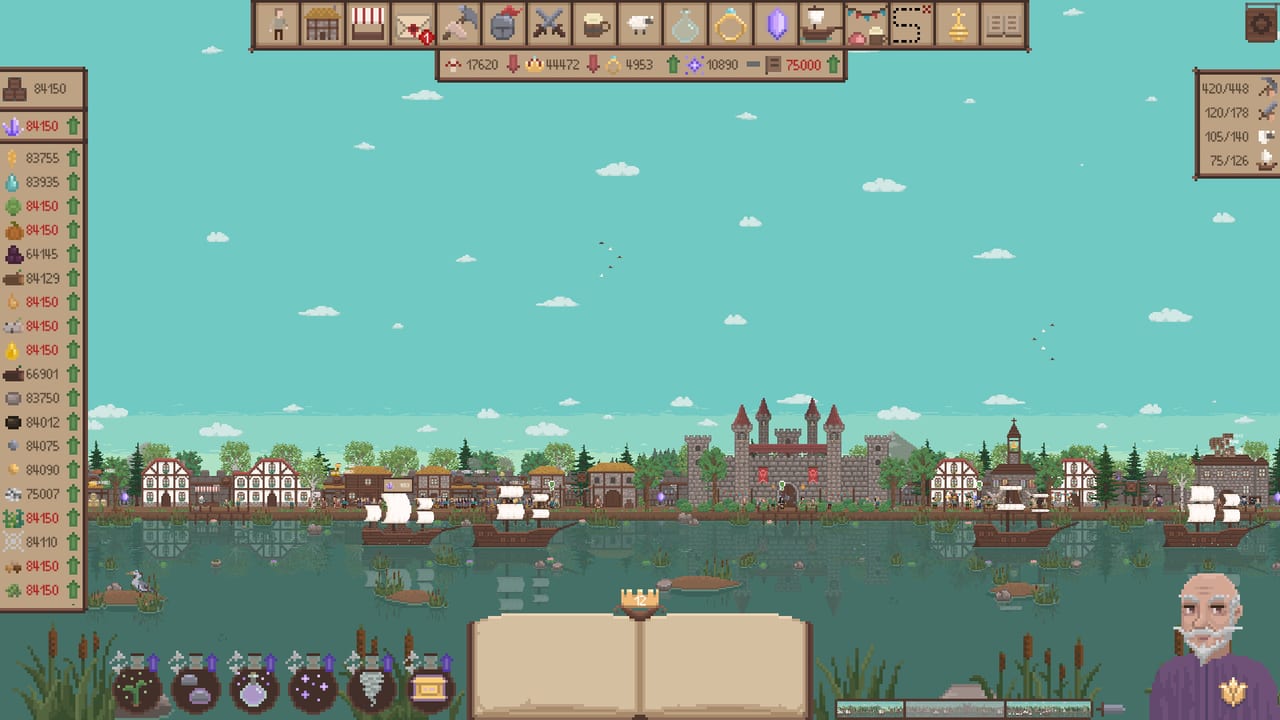
Next Reign: Kingdom is a $4.99 Steam incremental (intro $3.99 through September 10, 2026) from Tiny Tulip Games, a first-time studio shipping in Godot. It launched September 3, 2026 for Windows and Linux. There is no Mac build. There is no multiplayer. There are no redeem codes. The pitch is a side-scrolling pixel village that grows into a walled kingdom, then hands the crown to the next generation. After a day with the launch build and a lot of demo footage, that pitch is honest. Whether you will like it depends on your tolerance for a dense HUD and a twenty-hour prestige spine.
This is a review, not a recap of every tooltip. For the opening hour, use the first-hour settlement checklist. For demo saves, use the demo to full transfer notes.
Who it is for
You will like Next Reign: Kingdom if you wanted The Settlers 4 to sprout an incremental tree. Coal and iron ore into bars into tools is the fantasy. Farmers, lumberjacks, and miners becoming a mob is the joke that stays funny. Formation combat is light on purpose: five unit types, a tank, a purple mage, goblins and fiery treants, a main quest named Blade Queen. Prestige is the long hook, with 100+ upgrades and collection milestones at 100 and 100,000 of each resource type.
You will bounce if you wanted a 3D spectacle, a friend on a second keyboard, or a live-service loop with daily login gifts. You will also bounce if a left-side spreadsheet of arrows makes you tired. The v0.3 UI, which replaced the bottom info box with an open book and shoved low-stock filters onto a hover panel, is better than the original demo chrome. It is still a lot of UI. The advisor, a bald king in purple, helps. He does not make the first market cheap.
The stated campaign is about twenty hours, plus the usual incremental aftertaste where you keep chasing later tree columns at 28, 37, and 48. Twenty hours is a sweet spot for $5. It is not a hundred-hour MMO. Steam Cloud is there. Twenty-two achievements are there. Family sharing works like any other Steam game. None of that turns it into a service.
What works
The opening is correct. Hold click on wheat, hire farmers, discover that wood is the real bottleneck. The game teaches systems in the order Tiny Tulip advertised: gather, produce, trade, fight, prestige. Each layer stays relevant because new resource types are prestige points. Glory from a fight is not flavor text. Hops from experienced farmers are not a meme crop. They are 100-milestones with recipes attached.
Prestige batches are a smart twist. A one-point reset is weak. A six-point reset, which the game itself suggests, opens a kit: auto trades, farmer bonuses, cheaper buildings around 25%, starting 250 wheat / 150 wood / 80 stone. That kit makes the second reign feel designed instead of punitive. Formations persisting across prestiges is a small sentence that saves a lot of busywork.
Combat is good enough. It will not replace a tactics game. It gives the village a reason to spend tools on someone other than lumberjacks. Blade Queen is a named flag you can chase. The final quest exists as a campaign close instead of an endless meat wall. That matters in a genre that often forgets to end.
Pixel presentation is clean. The settlement, the walled dock town, and the castle skyline are readable at a glance. Manual gathering on nodes keeps your hands in the world during the five minutes before automation. Bookmarks on F and G are the kind of quality-of-life you only notice when a game omits them.
What does not
The HUD learning curve is real. Top tabs, left arrows, book, crown, formation board, advisor portrait: new players will click the crown because it glows. The camera and HUD anatomy page exists because the game, even with a better tutorial in v0.3, still asks you to parse a lot. If you hate menus, this is a menu game with a pretty strip of houses attached.
Launch-week caveats apply. Tiny Tulip is a two-person-scale first game. Steam review counts on day two are small. Balance on later prestige columns and on auto combat will move; this review will not invent patch numbers that have not shipped. The intro price ends September 10, 2026. After that you are paying five dollars, which is still right, but the discount is a launch fact, not a law of nature.
The demo’s end content is not a perfect preview of every late full-game system. Magic crystals, potions, livestock, docks, and the castle are in the pitch and in late footage; the feel of those last hours will vary more than the feel of the first market. If you only played until hops, you have not seen the whole twenty hours. If you imported a demo save, read the demo to full transfer notes so you are not surprised by where the file drops you.
Combat can drain a village that is not ready. That is fair design. It still feels bad if you opened Blade Queen because the name was cool. Production stalls from a missing warehouse still feel like bugs even when they are user error. The game is not always loud about “you unlocked it but did not place it.”
Price, platforms, and time
$4.99 is the number. $3.99 until September 10, 2026 is the launch intro. Windows and Linux on Steam. Godot. No mobile client. There are no redeem codes to type in. About twenty hours of progression, 100+ prestige upgrades, five combat unit types with tiers, 22 achievements. Those are store facts, and the build matches them.
Time-to-fun is short if you accept the click-the-wheat minute. Time-to-mastery is the whole prestige tree. A single evening can see a market and a first fight. A weekend can see a first crown. The castle and the final quest are the “I am actually playing this game” goals. That spread is healthy.
Solo only. If your group-play test is “can my friend sit in,” the answer is no. Play something else together and keep this in the single-player pile next to other incrementals. That is not a flaw in the design. It is a boundary. This review is repeating it because store pages bury the word single-player and people still ask.
Verdict
Buy it if production chains and a crown reset sound like a good Friday night. Wait if you need a bigger studio’s UX polish or a multiplayer checkbox. The first-hour friction is solvable with the first-hour settlement checklist and patience. The long-term hook is the tree, which the phase-by-phase campaign walkthrough and How to hand the crown already treat as the real campaign.
Next Reign: Kingdom is a small game that knows its ancestors. It is not a joke asset flip and it is not a live-service trap. It is a Settlers-flavored incremental that ends, prestiges, and asks you to read a HUD. For five dollars, that is an easy recommendation to the right person, and an easy pass for the wrong one. Launch week will add comments; it should not add a different genre.
Frequently Asked Questions
Quick answers for new rulers and returning prestige runners.
Is Next Reign: Kingdom worth $4.99?
Yes if you like production incrementals and can live with a dense HUD. Spend the first hour with the first-hour settlement checklist before you judge the price.
Can I play with a friend?
No. It is single-player only on Windows and Linux. If you wanted a shared kingdom, this is the wrong store page. The phase-by-phase campaign walkthrough is a solo timeline.
Does the demo save carry over?
Tiny Tulip said demo progress can transfer into the full game. Practical steps sit on the demo to full transfer notes.
Is the HUD as bad as people say?
It is dense, better after the v0.3 book, still a learning curve. The camera and HUD anatomy page is the map I wish the first tooltip had been.
Should I wait for patches?
The game is out. This review will not invent post-launch patch numbers. If you already like Settlers-style chains, start. Prestige advice is on How to hand the crown.
Combat or economy: which is the real game?
Economy. Combat feeds glory and remains into that economy. Read formation combat and the Blade Queen so the army tab is a farm, not a surprise RTS.