Next Reign: Kingdom Building Priority List
The order that keeps wheat green and the army from starving before the Blade Queen.
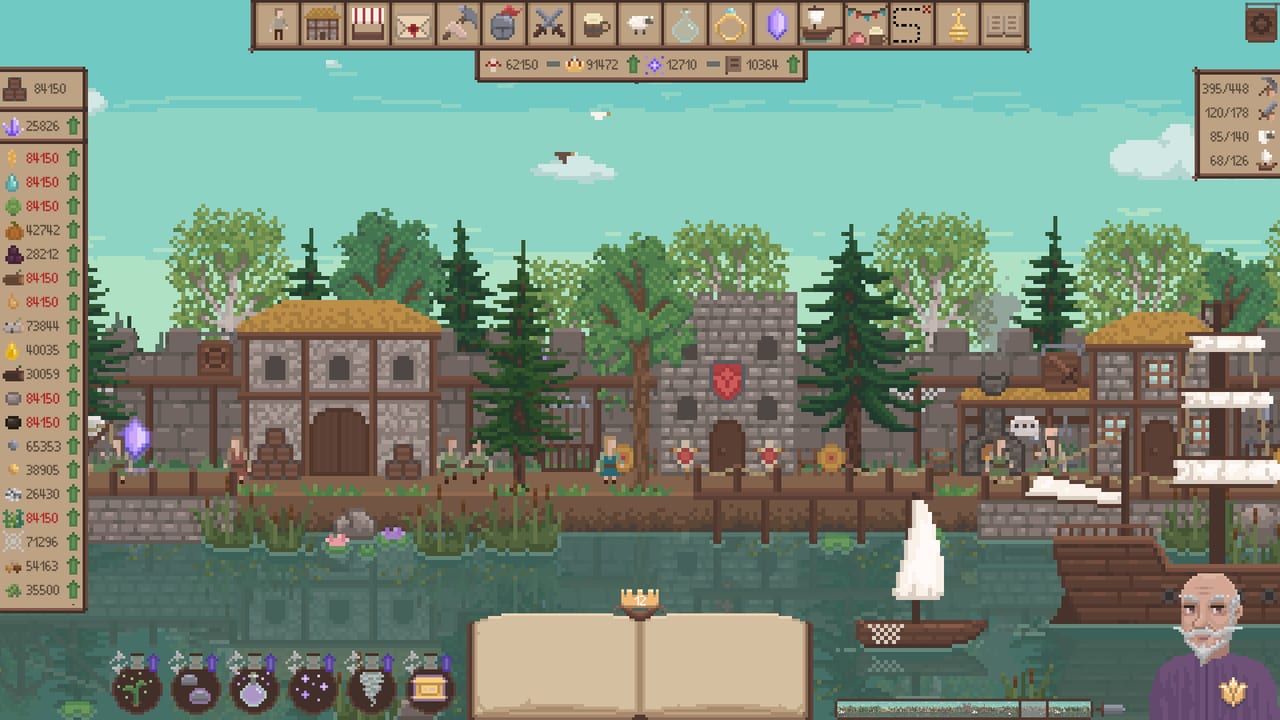
Buildings in Next Reign: Kingdom are not a skyline contest. They are a queue. The left-hand resource panel in the v0.3 HUD tells you whether the queue is honest: green arrows mean a stock is rising, red arrows mean you just built the wrong thing or hired the wrong job. This page is the priority that launch-week play keeps rediscovering. Houses first. Matching production next. Warehouse after you can fill it. Market after you have something to trade. Walls when combat is the next point, not when the field still looks empty. Castle, docks, ships, and the windmill are later. If you want the construction details, use the buildings guide. If you want the red-arrow checklist, use the production planner. Army letters sit on the unit tier list.
The order, in one board
| Priority | Building | Role |
|---|---|---|
| 1 | Houses | Worker space. Farmers, lumberjacks, and miners do not exist without a bed. |
| 2 | Matching production | Wheat jobs when wheat is red, lumber when wood is red, mines / coal shaft / smelter / smithy when that chain is the stall. |
| 3 | Warehouse | Raises the cap so production is not discarded. First warehouse is a milestone, not a spam button. |
| 4 | Market | Turns overflow into favor and missing materials. Useless if wheat and wood are still the emergency. |
| 5 | Walls (line of defense) | The door to combat quests. Build it when you can train peasants, not as decoration. |
| Later | Iron smelter, tool smithy | The bar and tool engines. They are “matching production” when the chain reaches them. |
| Late | Castle, docks, ships, windmill | Skyline and late systems. Do not rush them on a first reign. |
This is a priority list, not an S-through-C PvP grid. A warehouse is not “worse” than a house. It is later. A wall is not “bad.” It is expensive in time if you raise it before anyone can stand on it.
Houses are the real cap
Trained workers need housing space. Upgrading a worker to the next tier eats a worker of the previous tier and does not demand a second bed, which is why experienced farmers are such a clean spike once tools exist. Until then, every new farmer is a cottage problem. Launch-week VODs stall the same way: they hire until the house cap, watch wheat go green, spend all the wood on the next project, and then cannot place the next house. If the panel says wheat is red, the fix is often more farmers, which is often more houses, which is often more wood. That loop is the game. Prestige extra house space and cheaper buildings exist because Tiny Tulip knows this is the choke.
Do not save house slots for a unit you have not unlocked. Empty beds do nothing. Fill them with farmers first, then lumberjacks, then miners, in that order, unless a red arrow is already screaming about wood or stone. Population is the multiplier. Pretty layouts are not.
Matching production, not “one of each”
Matching production means you build the job that feeds the red resource, not the building whose tooltip you have not seen yet. Wheat red: farmers, and the houses those farmers require. Wood red: lumberjacks, and stop dumping the last logs into a market you cannot staff. Stone red: miners. Coal gated: the coal shaft so miners can pull coal instead of only stone. Bars stalled: iron ore plus coal plus the smelter, not a second warehouse. Tools stalled: the tool smithy, which eats bars, which means the smelter has to be alive.
The iron chain is the first time matching production feels like a factory. Coal and iron ore go in, bars come out, bars become tools, tools promote workers into tiers that collect faster and eventually pull hops from experienced farmers. If you drop a smelter while coal is still locked, you built a monument. If you drop a smithy while the bar stock is a trickle, you built a queue. The production planner is the symptom chart; this page is the reason the chart exists.
Warehouse after you can fill it
A warehouse is a cap, not an income. Demo play put the first warehouse around a few hundred extra storage — one VOD called the jump toward 450 — which is exactly when trades, coal, and bars start to exist. Build it when wheat or wood is bumping the ceiling, not because the button unlocked. A second warehouse before the first is full is how people run out of wood for houses.
Prestige warehouse space is the lazy version of this building. Take that node when caps are the stall. Do not take it instead of farmer yield on a first reset.
Market after overflow, walls after an army can exist
The market is how you buy favor and patch a missing material. Early trade cards in public play include wheat-for-wood, hungry peasants (wheat for favor), and wood-for-favor for freezing households. Those are good when wheat is green. They are sabotage when wheat is red and you still sell it. Auto-start trading quests on the prestige tree is S because it removes the babysitting, not because trading is the first engine. Unlock the market when the warehouse is not starving and you can afford the wood it asks for. Nookrium’s demo spent a long time staring at a 450-wood market bill; that is the “matching production” test in disguise.
Walls — the line of defense — are the combat door. Peasants, spearmen, and the Blade Queen do not care how handsome the cottages are if the line is still a construction site. They also do not care about walls if you have no peasants and no bars. Raise the line when Humble Beginnings is the next quest, then go train the free peasant and open formations. Until then, wood in walls is wood not in houses. The unit tier list assumes this door exists; it will not rank an army you cannot field.
Later buildings, and why they wait
The smelter and smithy are not “late game” in the prestige sense. They are the moment the first reign becomes an incremental instead of a clicker. They still wait on coal, ore, and a warehouse that can hold the output. Castle, docks, ships, and the windmill show up in later skyline shots and in the store copy’s “thriving medieval kingdom.” They are not how you beat the first six prestige points. If a late building asks for a resource you do not print, you have skipped a chain. Go back to matching production rather than placing the castle as a motivational poster.
A first-reign build order that respects this list:
- Houses until farmers fill them.
- Lumberjacks until wood can pay for the next houses.
- Miners, then the coal shaft when coal is the gate.
- Warehouse when a cap is actually biting.
- Market when wheat and wood can survive a trade.
- Line of defense, then peasants.
- Smelter, then smithy, then worker tiers.
- Castle and docks when the book HUD is no longer covered in red.
If that order bores you, prestige is the spice, not a second warehouse. Hand the crown when the current field cannot print the next point, then spend the points on cheaper houses and farmer yield so this list runs faster the next time.
Frequently Asked Questions
Quick answers for new rulers and returning prestige runners.
Why are houses first instead of walls?
Workers need beds. Walls need an army. Train that army after cottages exist — the unit tier list starts when the line of defense is already up.
When do I place a warehouse instead of another house?
When a stock is hitting the cap, not when the button appears. If population is the stall, houses still win; prestige extra beds on prestige upgrades are the lazy version.
When should walls go down?
When Humble Beginnings is the next quest and you can afford the first peasants. Formations after that are on units.
Is the market an S-tier building?
It is fourth. Auto trade on prestige upgrades is S; the building itself waits on overflow wheat and wood.
Where do the smelter and smithy sit?
Under matching production, once coal and ore exist. They are not a skip around houses. Combat gear still follows the unit tier list.